

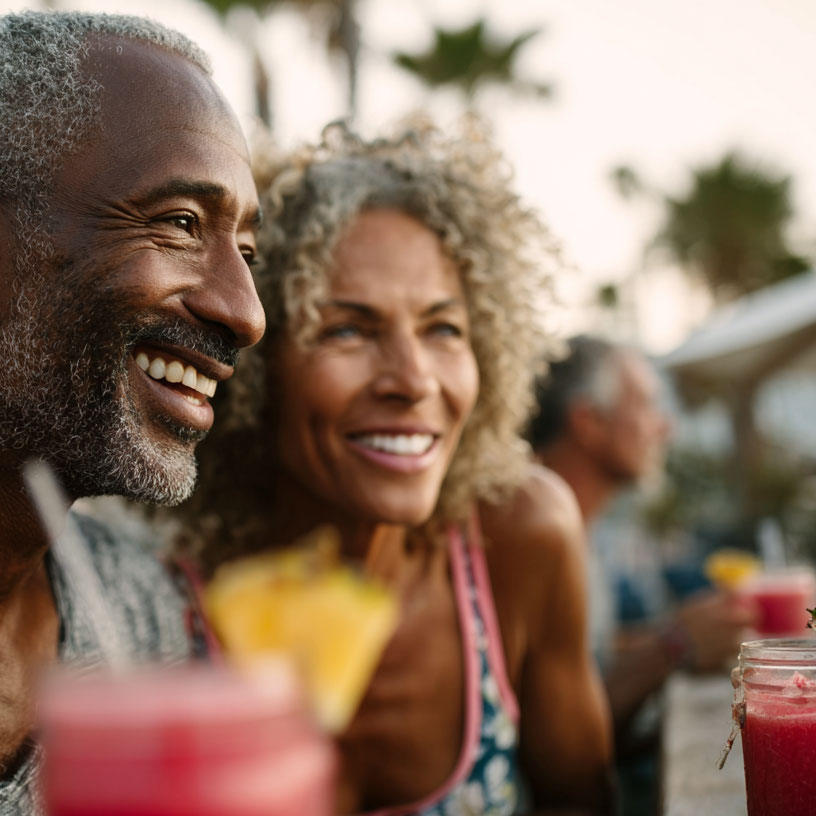
Across the global wellness landscape, a defining shift is taking place. After years of chasing optimization, performance tracking, and individual improvement, people are realizing something profound: wellbeing isn’t only about what we do; it’s about who we’re connected to.
The Global Wellness Institute (GWI) has identified social connection as a rapidly emerging pillar of wellbeing, and the data makes the case impossible to ignore.
The world is experiencing a profound crisis of disconnection. According to the Global Wellness Institute:
Loneliness increases the risk of premature death by more than 25%.
It contributes to over 871,000 deaths a year worldwide.
Meta-analyses show it raises dementia risk by 50%.
Nearly 1 in 6 people globally are affected.
(Source: GWI — “Wellness Policies Can Combat Loneliness,” 2025)
These are not soft metrics; they are health risks on par with smoking, obesity, and inactivity. And they are rising sharply among adults who feel pulled in every direction except toward one another.
GWI has also documented the global doubling of loneliness rates over the past 40 years, with 61% of American adults now reporting they are lonely, and similar patterns emerging in the UK, Japan, and beyond.
(Source: GWI — “Human Connection in a Time of Physical Distancing,” 2020)
The message is clear:
Connection isn’t optional for wellbeing — it is biological, emotional, and essential.
Traditional gyms and fitness models were designed around personal performance: earbuds in, heads down, everyone focused on their own output. But this doesn’t match what today’s adults need most.
Global trends tracked by GWI point to a new reality:
People around the world are seeking hybrid environments where movement, restoration, and human connection live under one roof.
This is the rise of social wellness, and it’s reshaping the global industry.
GWI reports that the global wellness economy reached $6.3 trillion in 2023, representing 6.03% of global GDP. It is projected to grow to nearly $9 trillion by 2028.
(Source: GWI — Global Wellness Economy Monitor)
Within that growth, one category is accelerating faster than almost any other: wellness communities and social-based wellbeing environments.
People are no longer looking for a gym membership.
They’re looking for a place to feel connected, energized, healthier, and more human.
The shift toward social wellness is strongest among adults who have outgrown the performance pressure of traditional fitness but still want vitality, strength, and connection in their daily lives.
They’re prioritizing:
They’re seeking what many have lost — a place to belong outside of work and home.
SOZO Clubs were created in response to the very trends GWI has highlighted. Built for adults 30–75+, SOZO blends:
All under one roof.
Every element of the SOZO ecosystem reflects a core belief shared by the most influential global wellness research:
Wellbeing transforms when it’s rooted in connection.
SOZO is part of the new global movement redefining how people experience wellness, shifting it from isolated improvement to shared vitality.
The Global Wellness Institute’s research points toward a new evolution in wellbeing. Longevity, mental health, and social connection are converging into a single truth:
Connection is becoming the most important health metric of our time.
People don’t just want to feel well, they want to feel connected.
They don’t just want to extend their lifespan, they want to enrich their healthspan.
And they don’t just want a place to work out, they want a place to belong.
That is the future SOZO is building toward.
Disclaimer: This article draws from publicly available research and insights published by the Global Wellness Institute (GWI). It is not affiliated with or endorsed by GWI. All references are used for educational and informational purposes only.
To Receive Exclusive Updates, and a Preview of What’s Ahead at SOZO Clubs.